Dark Kitchen Cabinets, The Complete Guide to Colors,
There’s a moment, usually while doom-scrolling through kitchen remodel photos at midnight, when you fall for dark cabinets. Hard. They look dramatic and grounded and somehow both timeless and completely modern. Then you wake up the next morning and think: But will they make my kitchen look like a cave?
That’s the question I want to actually answer here.
Dark kitchen cabinets are having a long, sustained moment. Not a trend that’s about to die, but a real design shift that’s been building for years. And done right, they can be one of the most stunning, character-rich choices you make in a kitchen. Done wrong, wrong lighting, wrong layout, wrong color pairing- they can feel heavy and cold.
This guide is about helping you figure out which side of that line you’ll land on before you spend a single dollar.
Why Dark Cabinets Keep Gaining Ground
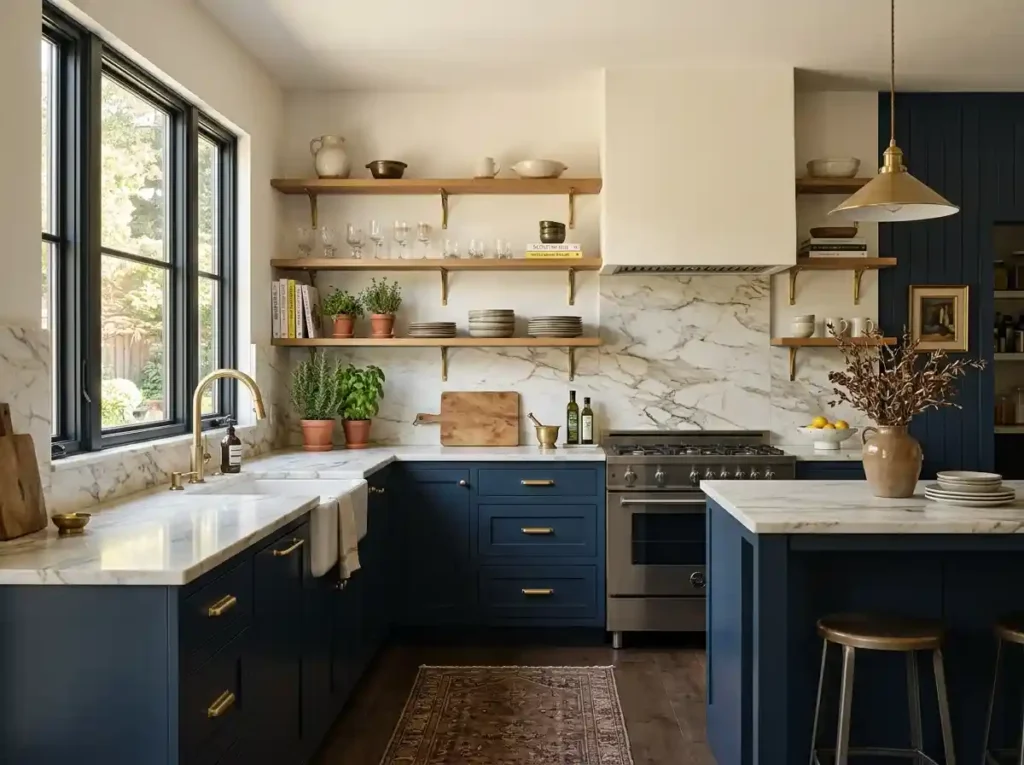
For a long time, the default answer to “what color should my kitchen cabinets be?” was white. Bright, clean, safe. And white cabinets are genuinely great, I’m not here to argue otherwise. But somewhere along the way, people got tired of kitchens that looked identical to every other house on Zillow.
Dark cabinets offer something white cabinets can’t easily pull off: personality. They make a kitchen feel intentional. Collected. Like someone actually made a design decision instead of just picking the safe default.
There’s also a practical angle that doesn’t get talked about enough. Dark finishes are more forgiving of certain everyday messes. Coffee splashes, fingerprints on wood-toned surfaces, water drips near the sink — these are less visible on dark cabinetry than they are on white painted boxes. (More on the flip side of that later, because it’s not all good news.)
The style’s staying power is also real. Charcoal, navy, black, and deep green, these colors have roots in traditional, transitional, and modern kitchens alike. They’re not a trend that peaked in 2021 and is now aging in people’s homes. They’ve been used in high-end kitchen design for decades. The broader market just finally caught up.
Popular Dark Cabinet Colors, And What Each One Does
Not all dark cabinets are created equal. The color you choose shapes everything: the mood, the size feel, the pairing options, and the long-term livability. Here’s an honest breakdown.
Black & Charcoal
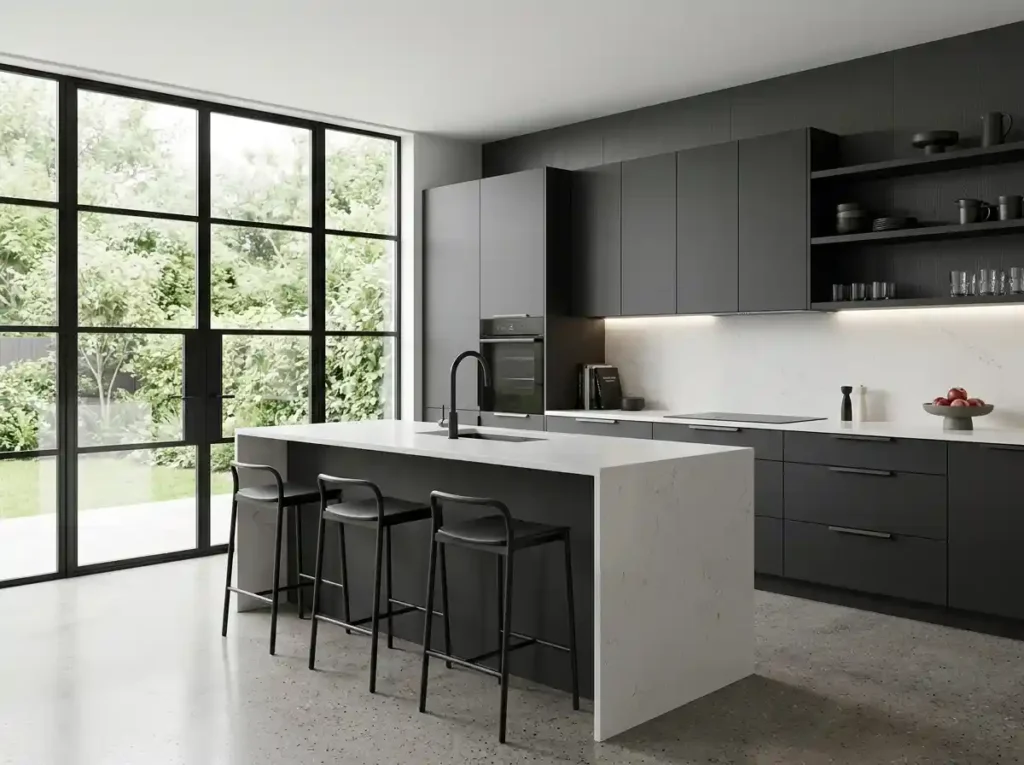
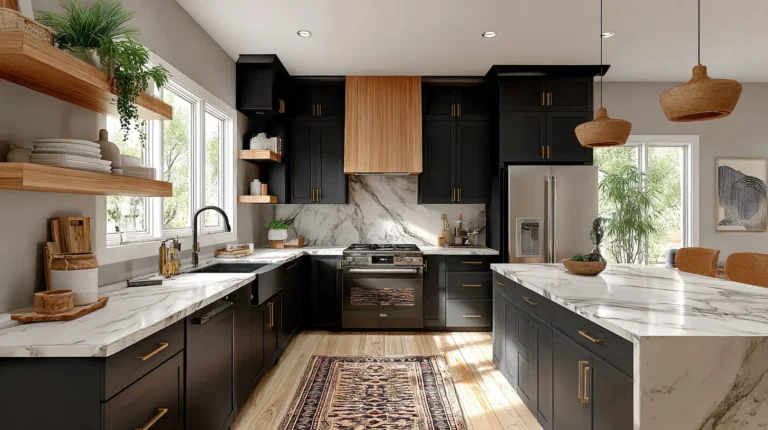
Black cabinets are the most high-contrast option, and they commit fully to a bold look. Done well, with the right lighting and lighter countertops or walls, they feel sleek and striking. Done poorly, they can make a kitchen feel like a bunker.
Charcoal is the more forgiving cousin. It reads as dark from a distance but has warmth or coolness depending on the undertone. It pairs well with almost any countertop and gives you a lot of flexibility with wall and floor colors. If you want drama without going full black, charcoal is often the smarter move.
Both of these work best in kitchens with decent natural light or a solid artificial lighting plan.
Dark Navy
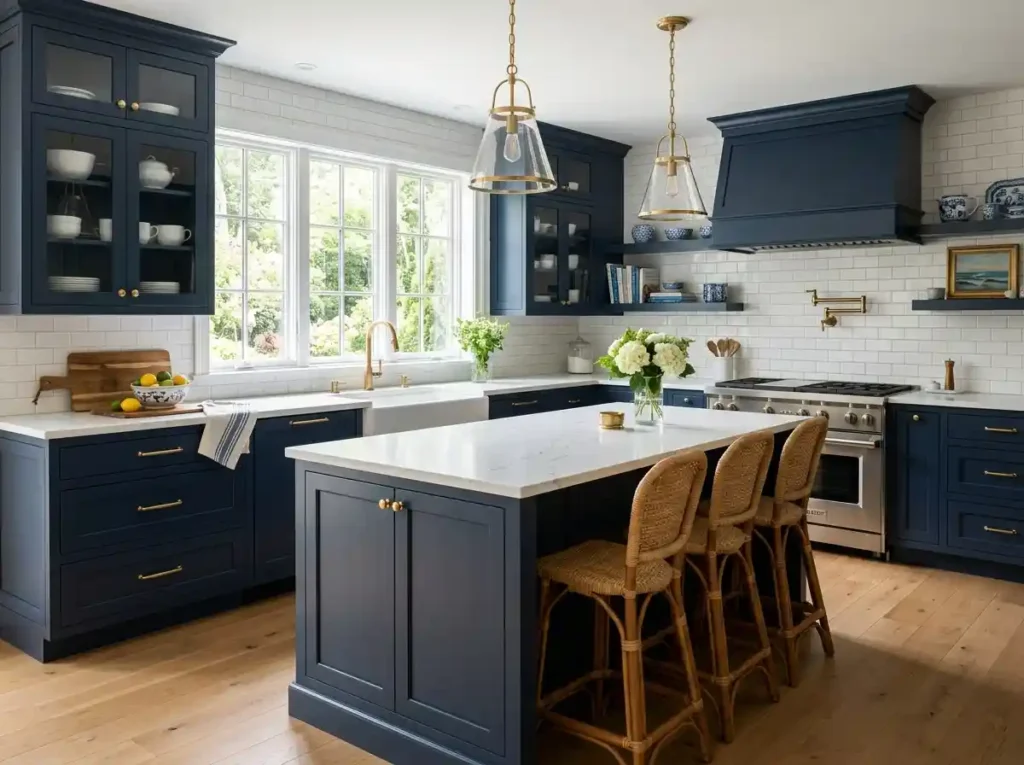
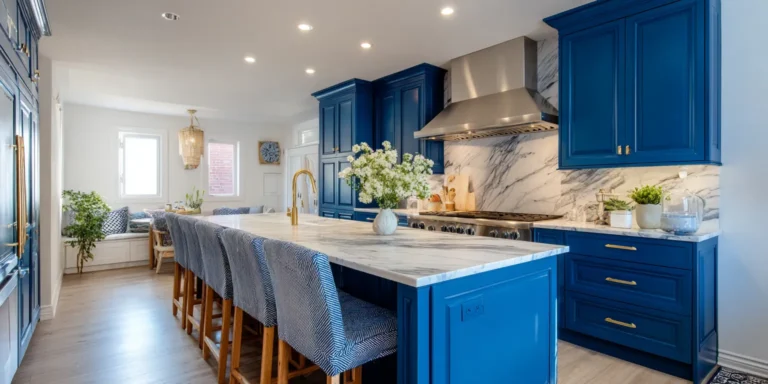
Navy cabinets are having a real moment, and honestly, they deserve it. There’s something about navy blue against white countertops and brass hardware that feels both classic and fresh at the same time. It works in farmhouse kitchens, transitional kitchens, and coastal-style homes without feeling forced.
What I love about navy is that it reads as “dark” without feeling as heavy as black or charcoal. It still brings light into the space in a way that a flat black simply doesn’t. It also pairs beautifully with natural wood tones and warm whites, which gives you a lot of flexibility.
The one caution: Navy has strong blue undertones. If your floor or countertop pulls warm and golden, you need to check the pairing carefully. Some combinations work; others create an odd cool-warm tension that’s hard to fix without repainting.
Espresso & Dark Walnut
These are the warm-toned darks, and they’re worth their own category. Espresso finishes and dark walnut stains bring richness and depth without the starkness of a painted black or charcoal. They feel organic. Traditional. And in a kitchen with warm lighting and natural wood floors, they’re incredibly inviting.
The thing to keep in mind here is that these are almost always stained, not painted, finishes — which means they’re typically only available on wood or wood-grain cabinetry. The texture of the wood grain shows through and adds visual interest that a flat painted finish can’t replicate.
If you like the warmth of wood but want something darker and moodier than a natural oak or maple, espresso and dark walnut are the place to start.
Forest Green & Deep Emerald
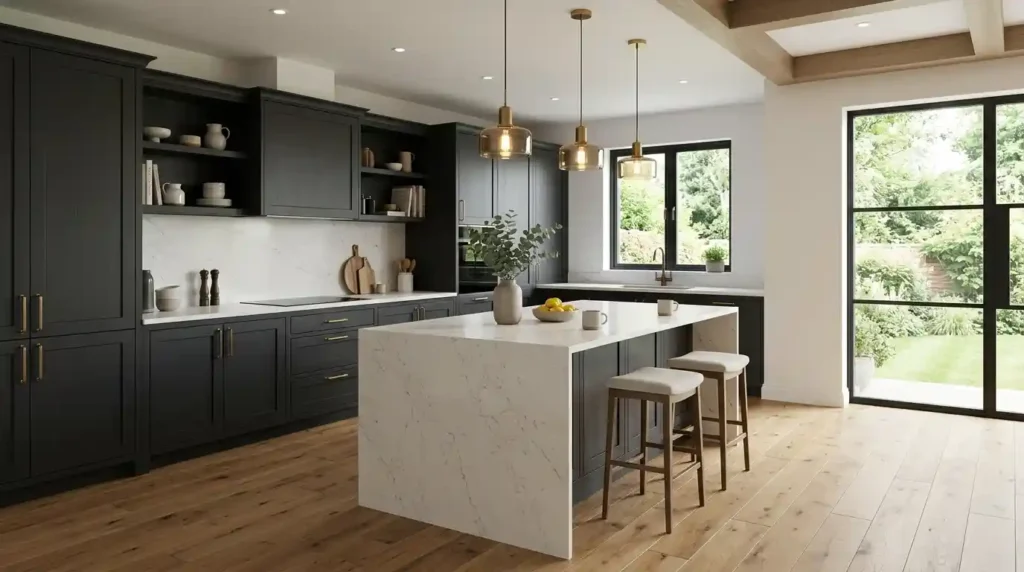
This is the color that surprises the most people once they commit to it. Deep green cabinets — whether they lean toward a dusty sage-green at the dark end, a true forest green, or a saturated jewel-toned emerald — have a quality that’s hard to describe until you see it in person. They feel alive.
Green works especially well in kitchens that connect to outdoor spaces or have natural light from a garden-facing window. It also pairs better with a wider range of countertop and hardware options than people expect. Brass and unlacquered bronze look spectacular with green. Black hardware is sharp and modern. Even chrome or nickel can work if the green has enough cool tones.
The risk with green is undertones. A forest green in a showroom under bright LED lighting may look very different in your kitchen under incandescent bulbs in the evening. Sample it first. Paint a test board. Live with it for a few days before ordering cabinets.
Painted vs. Stained: Choosing Your Finish
This decision matters more than most people realize when going into a cabinet project, and it’s worth spending a minute on.
Painted dark cabinets give you a smooth, opaque, consistent finish. The color fully covers the wood. You get clean lines and a more modern or traditional look, depending on the door style. Painted finishes are available on almost any cabinet material — MDF, plywood, solid wood. They’re also easier to touch up in theory, though matching paint on a repaired spot isn’t always as seamless as it sounds.
The downside is durability over time. Painted finishes, especially on areas that get heavy daily use like lower cabinets, drawer fronts near the stove, and corner base cabinets, can show wear, chips, and scuffs eventually. Dark painted finishes make those chips more visible than light ones do because the bare wood or primer beneath is much lighter.
Stained dark cabinets let the wood grain show through. The finish adds depth and color while keeping the natural texture of the material visible. This is what gives espresso and dark walnut cabinets their warmth and richness. Stained finishes tend to age more gracefully than painted ones because minor wear and scratches blend in rather than stand out.
The trade-off is that stain options are more limited. You need a quality wood species to stain well, and MDF simply doesn’t take stain. Stained cabinets also can’t be re-done in a totally different color, the way painted ones can, without significant prep work.
If you’re after a sleek, contemporary, or traditional painted look, black, navy, and charcoal go with a painted finish. If you want warmth, wood texture, and long-term durability, consider a stained dark finish.
Best Door Styles for Dark Cabinets
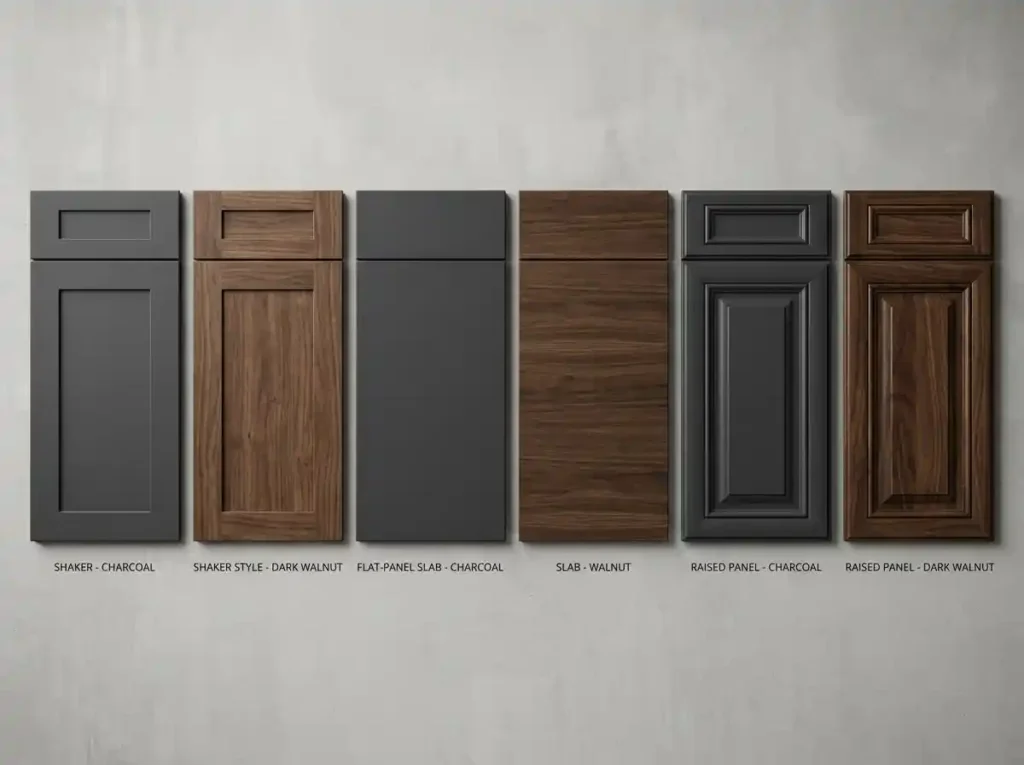
The door style you choose either amplifies or undercuts the dark finish. This pairing matters.
Shaker cabinets are the most common and forgiving option. The recessed panel creates a subtle shadow line that adds dimension to a dark finish without overcomplicating things. Dark shaker cabinets look great in both transitional and modern farmhouse kitchens. They’re also widely available, which means more competitive pricing when you’re shopping around.
Flat-panel (slab) doors are the minimalist choice, and they work beautifully with dark finishes in contemporary and modern kitchens. A flat-front black or charcoal cabinet with integrated or bar-pull hardware is about as clean and intentional as a kitchen design gets. The risk is that flat-panel doors show every surface imperfection more than shaker doors do, so cabinet quality matters here.
Raised-panel doors have a more traditional, formal look. They can work with dark finishes — especially espresso or dark walnut stains in a classic kitchen — but they can also tip into feeling heavy or old-fashioned if the rest of the kitchen design doesn’t balance it out. If you love raised-panel in a traditional kitchen, go for it. Just be thoughtful with the rest of the space.
Beadboard or inset styles are less common with very dark finishes but can look charming in the right context — particularly navy or dark green in a cottage or farmhouse kitchen.
How to Pair Countertops with Dark Cabinets
This is where a lot of people either nail it or regret it. The countertop is doing as much visual work as the cabinet color, and the relationship between them defines the whole kitchen.
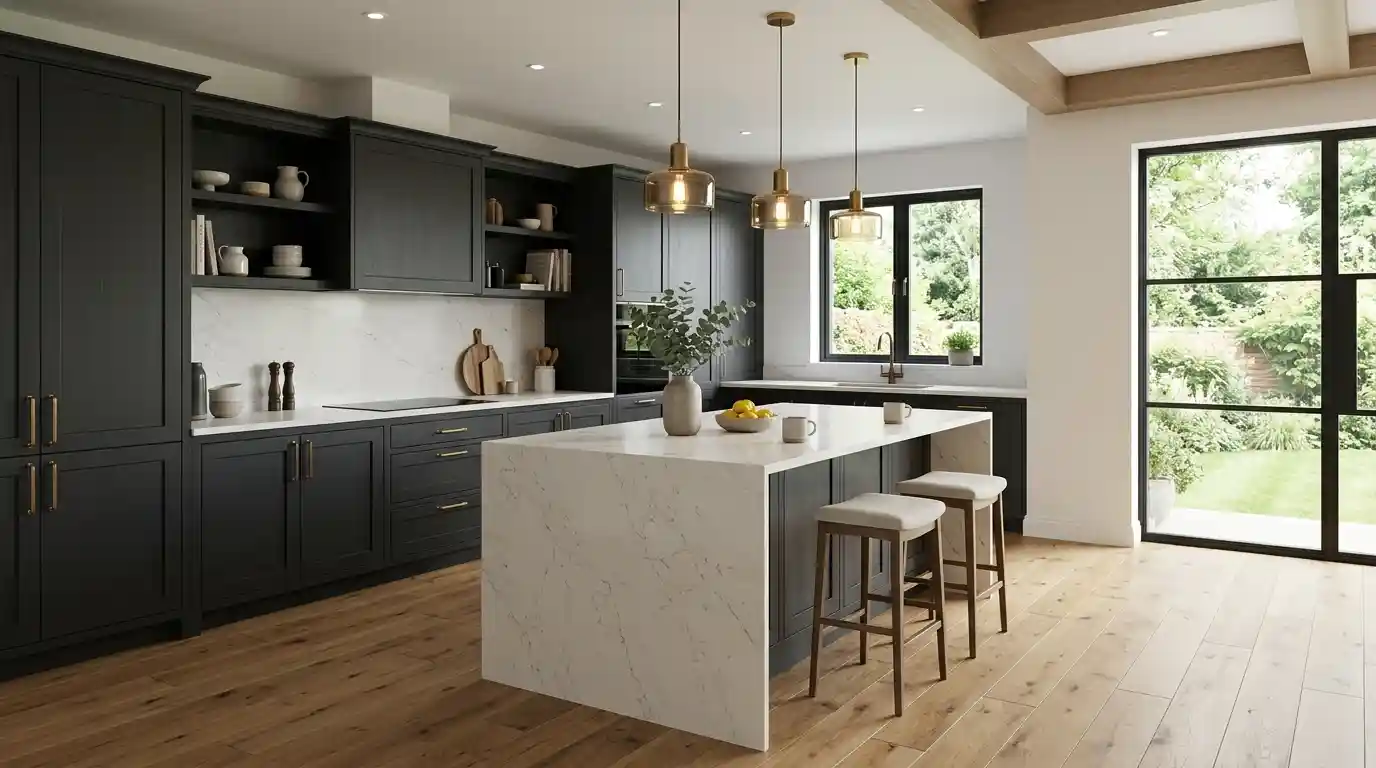
Light countertops with dark cabinets is the most classic approach, and there’s a reason it’s everywhere: it works. White quartz, light marble, pale quartzite, and honed concrete — all of these create contrast that prevents the dark cabinets from overwhelming the space. The lighter the countertop, the more breathing room you give the kitchen.
Matching dark countertops can be stunning, but it requires real commitment and a kitchen that can handle the drama. If you’re going full dark — dark cabinets plus dark countertops — you need strong lighting, light walls, and possibly some open shelving or glass fronts to let the eye rest somewhere. It’s a bold move, not a beginner’s move.
Wood-toned butcher block or live-edge countertops work beautifully with dark cabinets, especially espresso or forest green. The warmth of the wood cuts through the heaviness and adds an organic, lived-in feel that stone countertops don’t always give you.
Veined or textured stone — think a dramatic marble with bold veining or a quartzite with movement — adds visual interest that keeps the kitchen from feeling flat. If your dark cabinets are a fairly uniform solid color, a countertop with texture and pattern gives the eye something interesting to land on.
One thing to watch: undertones. If your dark cabinets have a cool undertone and your countertop pulls warm (or vice versa), the combination can feel off even when the individual pieces look great separately. Always bring samples home before finalizing anything.
Hardware That Works with Dark Cabinetry
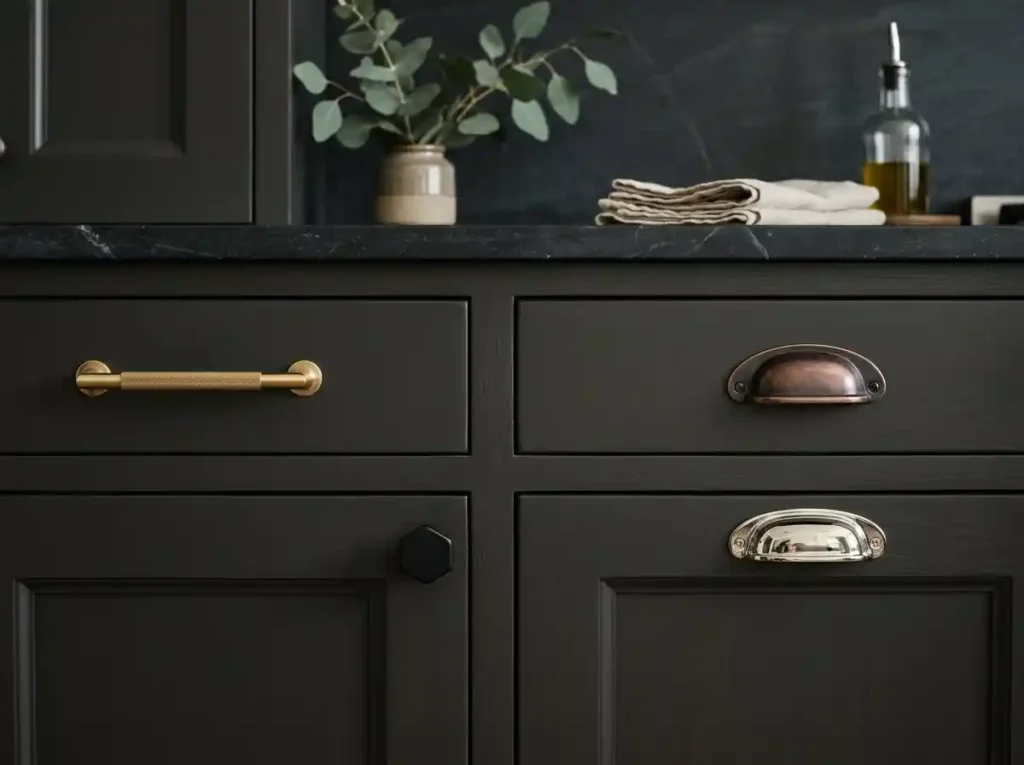
Hardware is the jewelry of your kitchen. On dark cabinets, the right hardware pops beautifully; the wrong hardware disappears or clashes.
Brass and unlacquered brass are the most talked-about pairing with dark cabinets right now, and they’ve earned it. Against navy, black, or dark green, brass has a warmth and richness that feels elevated without being fussy. Unlacquered brass will patina over time, which some people love and others don’t — know which camp you’re in before you commit.
Matte black hardware on black or charcoal cabinets is a deliberate, tone-on-tone move. It reads as sleek and intentional, not like you forgot to add hardware. On navy or green cabinets, matte black is sharp and modern.
Antique bronze or oil-rubbed bronze pairs well with warm-toned dark cabinets like espresso and dark walnut. It adds to the richness without competing with it.
Polished nickel and brushed chrome work best with cool-toned darks, charcoal, or cool-based navy. They add a crispness that keeps those cool tones from feeling too heavy.
Polished chrome on very dark cabinets can feel a bit stark if overdone, but as a subtle accent — a faucet, some edge pulls — it has a clean, high-end look.
The Two-Tone Strategy: Dark Below, Light Above
If full dark cabinets feel like too much, or if your kitchen doesn’t have the light to pull it off, a two-tone kitchen is absolutely worth considering.
The most common version, often called a tuxedo kitchen, uses dark lower cabinets and lighter upper cabinets. This is one of the smartest designs in a kitchen with average natural light because it grounds the space without boxing it in. The darker cabinets go toward the floor, where they feel anchored and practical. The lighter uppers keep the wall space open and airy.
It’s also a genuinely useful design from a storage and practicality standpoint. Upper cabinets store glasses, dishes, and pantry items — things you reach for constantly. Lighter upper cabinets make it easier to see what you’re grabbing. Lower cabinets handle pots, pans, and bulk storage — darker cabinetry there hides the nicks and dings from dragged pans more gracefully.
The other two-tone move: dark perimeter cabinets with a light or wood-toned island. This creates a natural focal point in the kitchen and lets you have the drama of dark cabinetry while keeping the center of the space feeling open.
Two-tone works best when there’s a clear reason for the transition and a consistent element that ties both parts together — a countertop that runs throughout, a hardware finish used on both, or a wall color that bridges the gap.
Flooring and Wall Colors That Balance the Darkness
Cabinets don’t exist in isolation, and dark cabinets in particular require some thought about what’s surrounding them.
Light-colored walls are the most forgiving choice with dark cabinets. Soft white, warm cream, pale gray, and off-white all work. They reflect light back into the space and keep things from feeling enclosed. This doesn’t mean your walls have to be white — but the lighter the cabinets, the more flexibility you have to go bolder with walls.
Medium-toned walls — a warm greige, a soft sage, a muted blue-green — can look stunning with dark cabinets if the value difference is managed well. The trick is to make sure something else in the kitchen is light enough to create breathing room.
Dark walls with dark cabinets is the all-in moody kitchen look. It works in the right space — usually a kitchen with great light and strong architectural detail — but it requires careful execution and typically benefits from professional design guidance.
For flooring, light to medium hardwood or LVP tends to balance dark cabinetry beautifully. It creates contrast at the floor level that keeps the lower half of the kitchen from feeling heavy. Lighter stone tile — creamy limestone, white or gray hex tile, soft marble tile — also pairs well.
Avoid very dark floors with very dark cabinets in a small kitchen unless you’re deliberately going for a dramatic, moody look and have the lighting to support it.
Lighting: The Make-or-Break Factor
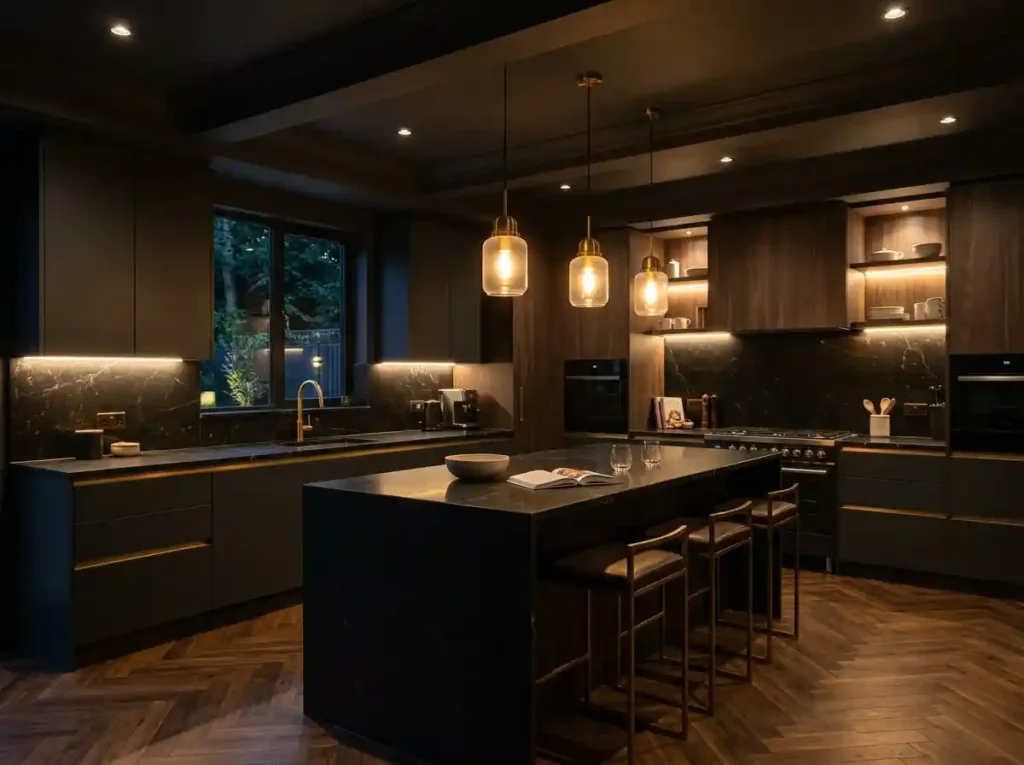
This is the section most people don’t read carefully enough, and then regret.
Dark cabinets absorb light. That’s just physics. White cabinets reflect it back into the room; dark cabinets pull it in. Which means if your kitchen has mediocre lighting before you install dark cabinets, it will have noticeably worse lighting after.
Natural light is your best friend if you have it. A kitchen with large windows, a skylight, or a bright open layout can absolutely handle dark cabinets without feeling closed in. If your kitchen is mostly interior-facing with small windows, you need to plan lighting carefully before committing to a dark cabinet finish.
Under-cabinet lighting is not optional with dark lower cabinets. It illuminates the countertop workspace that darker lower cabinets would otherwise leave in shadow, and it adds warmth and depth to the whole kitchen. This is a non-negotiable upgrade if you go dark.
Pendant lighting over islands and peninsula countertops serves both functional and aesthetic purposes. Pendants direct light downward to work surfaces while adding a visual element that draws the eye up and keeps the space from feeling heavy at the cabinet level.
Recessed lighting should be planned more densely in a kitchen with dark cabinets than in one with lighter cabinets. This isn’t always the first conversation a contractor has with you, so bring it up yourself.
Warm vs. cool bulb temperature also matters. Dark cabinets generally look better under warm light (2700K–3000K range). Very cool, white light can make dark cabinets feel cold and institutional. The exception is very modern, industrial-style kitchens where a cooler light is part of the intended aesthetic.
The bottom line: before you order dark cabinets, spend real time thinking about your lighting plan. It may cost you a few extra hundred dollars to add under-cabinet lighting or upgrade your recessed fixtures — but that investment makes or breaks how good those cabinets look every single day.
Maintenance: What Dark Cabinets Actually Hide (And Show)
I’ll be honest with you here, because a lot of articles are either all-positive or all-negative about this, and the reality is more nuanced.
What dark cabinets hide well: certain splashes and drips (especially on stained wood finishes), grease buildup in small amounts, everyday smudging on wood-grain surfaces, minor surface scratches on stained finishes, and general kitchen grime that accumulates slowly over time.
What dark cabinets show clearly: dust. Light-colored dust shows up extremely well on dark surfaces. This is the one thing people are genuinely surprised by. If you live in a dusty environment, have pets, or do a lot of cooking that moves air around, you will see that dust on your dark cabinets in a way you never would on white ones. A quick wipe keeps it under control, but it does require regular attention.
On painted dark finishes: drips from sauces, oils, and wet hands show up more clearly on painted dark surfaces than on stained wood ones. Flat or matte paint finishes are especially unforgiving — fingerprints and wipe marks show. A semi-gloss or satin painted finish is much easier to clean and maintain.
Chips and scratches on painted dark finishes expose the lighter material beneath, which creates noticeable contrast. This isn’t a dealbreaker, but it’s a reality of painted cabinetry in general, amplified on dark finishes.
For daily maintenance, a slightly damp microfiber cloth does most of the work. Avoid harsh cleaners and excessive moisture near seams, especially on painted finishes. A little regular attention keeps dark cabinets looking as good as they did on day one.
Resale Value: What to Know Before Committing
This is the question people ask and rarely get a straight answer to, so let me give you the most honest version I can.
Dark cabinets are no longer a “risky” or unusual choice, the way they might have been fifteen years ago. They’re mainstream enough that buyers recognize and appreciate them in a well-executed kitchen. A kitchen with beautiful dark cabinetry, good lighting, and thoughtful design reads as intentional and desirable, not polarizing.
That said, resale value for any kitchen is largely about overall quality and condition, not just color. Buyers who walk into a kitchen with dark cabinets that are in great shape, well-lit, and paired thoughtfully with countertops and hardware will generally respond positively. Buyers who walk into dark cabinets in a cramped, poorly-lit kitchen with mismatched finishes and cheap hardware may not.
The honest nuance: highly personalized dark choices, all-black everything, very dark walls, plus dark floors, plus dark cabinets in a small kitchen. It can feel harder to sell to a broader audience. Classic choices, navy blue, charcoal, and dark green, with lighter countertops and natural light, tend to appeal broadly.
If you’re planning to sell in the next two to three years, the safer move is probably a two-tone kitchen with dark lower cabinets and lighter uppers, or sticking with a dark neutral like charcoal that photographs well and appeals to most buyers. If you’re staying in your home for ten or more years, choose what you love and light it well.
When Dark Cabinets Are a Bad Idea
This is the section most sites skip, but I think it’s one of the most useful parts of this whole guide.
Very small kitchens with low ceilings and minimal natural light are genuinely not ideal candidates for all-dark cabinetry. Dark surfaces absorb light and can make an already tight space feel significantly smaller. If your kitchen is under 100 square feet and has one small window, I’d steer you toward a lighter palette or at least a two-tone approach with dark only on the lower cabinets.
Kitchens you’re planning to sell soon come with an asterisk as mentioned above. In most markets, dark cabinets are fine — but full dark kitchens that feel cave-like can narrow your buyer pool.
Renters who can’t repaint or update lighting often struggle to make dark cabinetry work in their favor. If you can’t add under-cabinet lighting or update wall colors to complement the dark cabinets already in your rental, you’re stuck with whatever result the current combination creates.
Homes in very warm, bright climates where the outdoor aesthetic leans light and breezy, coastal Florida homes, desert Southwest properties, casual beach bungalows, sometimes feel tonally odd with very dark kitchen cabinetry. It’s not a rule, but it’s worth considering whether the dark kitchen feels at home in your house’s overall character.
If you’re not ready to dust regularly, the visual maintenance of dark cabinets, especially in a high-traffic family kitchen, can get old fast. This sounds small, but it’s the complaint I hear most from people who went dark and have mixed feelings a few years in.
Final Takeaway
Dark kitchen cabinets are a real, lasting, beautiful choice — not a passing trend, not a risky bet, and not reserved for high-end custom homes. Real homeowners install them every day and love them for years.
But they’re also a choice that rewards planning. The color, the finish, the door style, the countertop pairing, the lighting — each of these pieces either adds up to something cohesive and stunning or creates a kitchen that feels like it’s missing something.
The single most important investment you can make before going dark? Lighting. Get that right, and most other challenges solve themselves. Then choose a color that actually works in your specific kitchen with your specific light, and pair it with a countertop that creates the contrast or warmth the space needs.
Dark cabinets done right are genuinely one of the most satisfying kitchen choices you can make. They make cooking feel more intentional, kitchens feel more designed, and honestly, after years of an all-white kitchen, they’re a breath of fresh air.
Just bring samples home first. And please, get an electrician to add that under-cabinet lighting.