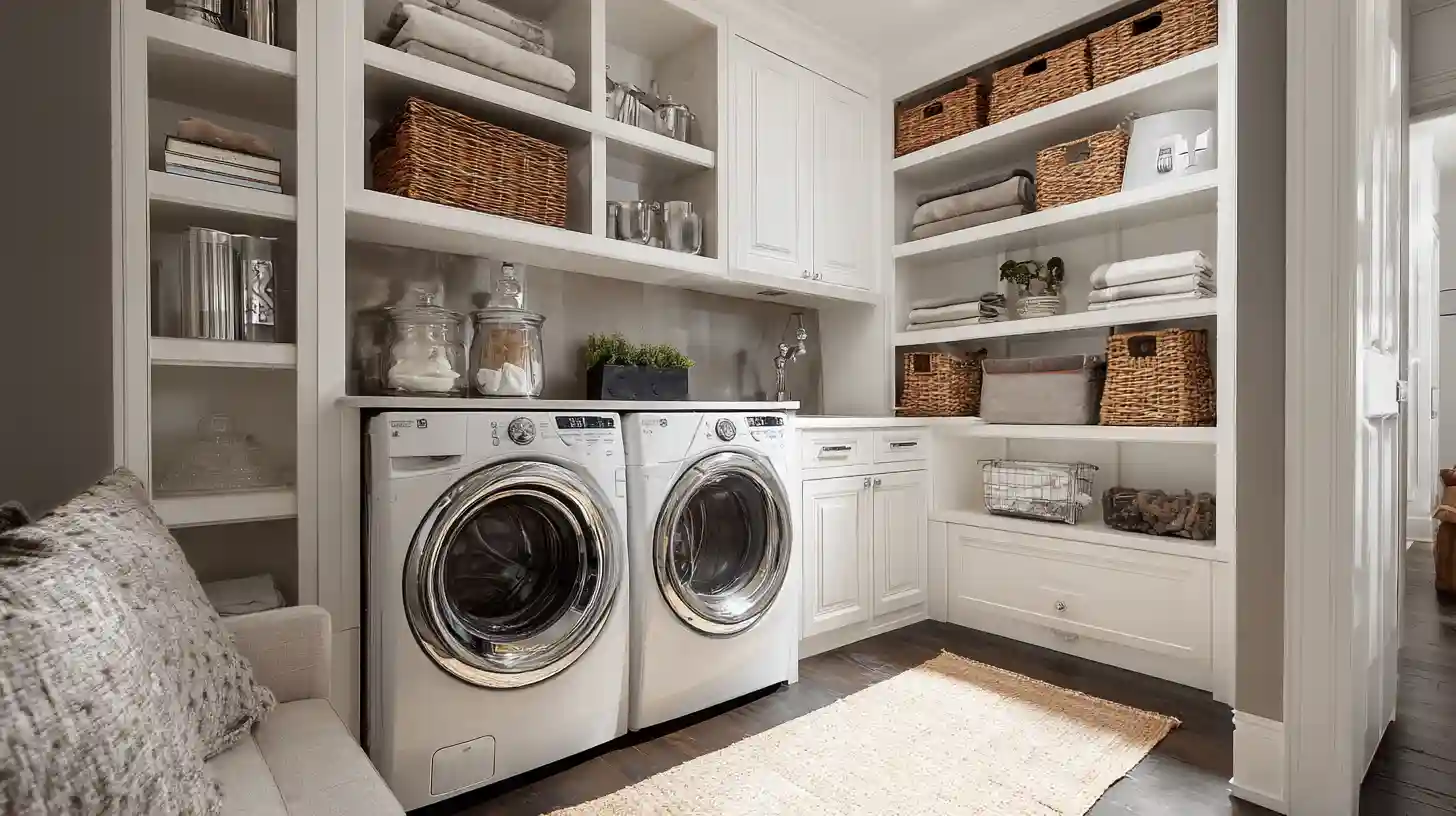
laundry room ideas small space. Maximize Style & Storage
If you’re searching for laundry room ideas small space solutions that actually work, you’re in the right place! I’ve styled dozens of compact laundry areas across the US, and I can promise you this: even the tightest 5 x 6 closet can become a hardworking and beautiful zone. The secret? Smart vertical storage, strategic color choices, and layouts that respect how you actually move through the space. Let’s transform your cramped laundry situation into a room you’ll actually want to show off!
1. Smart Space Planning & Layouts US Standards
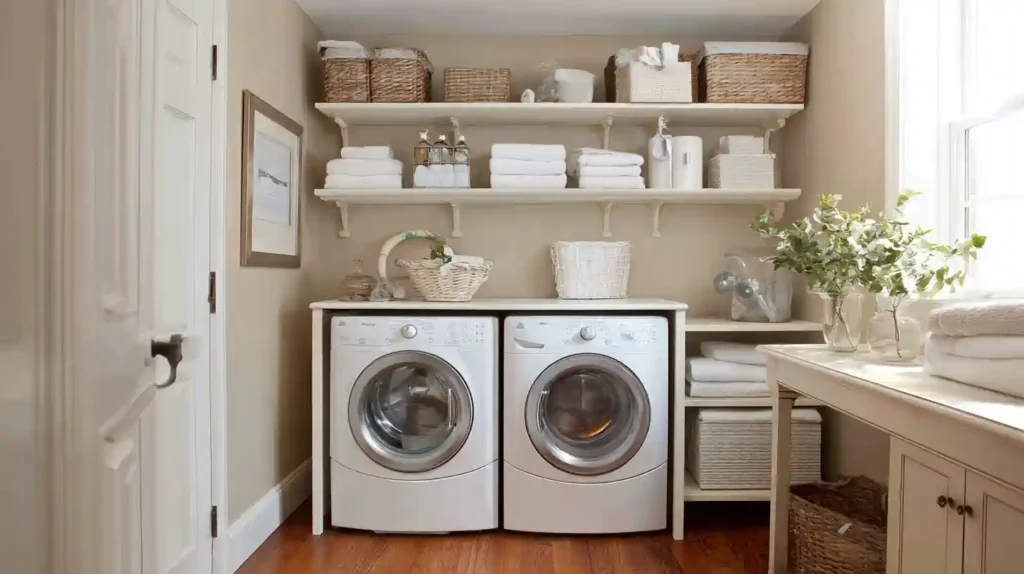
The Stacked Powerhouse. Why stackable units are the #1 choice for US apartments
Let me tell you, stacked washer-dryer combos are absolute game-changers for tight spaces. By going vertical, you’re reclaiming roughly 9-12 square feet of floor space that can be used for a folding counter, pull-out hamper, or even a small utility sink. Most stackable units fit within a 27-wide by 76-tall footprint, making them perfect for standard closets or alcoves.
I always recommend choosing front-load machines when stacking. They’re easier to access at eye level, more energy-efficient, and they create a flat surface on top for your dryer. Brands like LG, GE, and Electrolux offer stacking kits that are UL-certified and specifically designed to handle vibration safely.
The Work Triangle in Small Spaces. Placing the sink, hamper, and machine within a 4-6 foot radius
Just like in kitchen design, your laundry room needs a functional work triangle. I position the washing machine, utility sink, and dirty laundry hamper within a 4′ to 6′ radius so you’re never taking more than two steps between tasks. This setup cuts down on wasted movement and makes laundry day feel less like a workout!
Pro tip. If you’re installing a sink, place it next to the washer, not across the room. This way, you can pre-treat stains, fill the machine, and rinse out delicates without constantly crossing back and forth.
Clearance & Dimensions
Here’s where US building codes and appliance specs really matter:
- Minimum floor space required. Each machine needs at least 30 x 30 of floor clearance for proper airflow and serviceability.
- The 48-inch rule for front-loading door clearance. Always leave 48 inches of open space in front of your washer and dryer doors. This ensures you can fully open the door, load/unload comfortably, and bend down without hitting a wall or cabinet. If you’re working with less, consider pocket doors or sliding barn doors to save that precious swing space.
Bonus measurement. If you’re building custom cabinetry above a stacked unit, leave at least 3-6 inches of clearance between the top of the dryer and the bottom of your cabinets for ventilation and ease of installation.
2. Modern Farmhouse vs. Mid-Century Style Accents
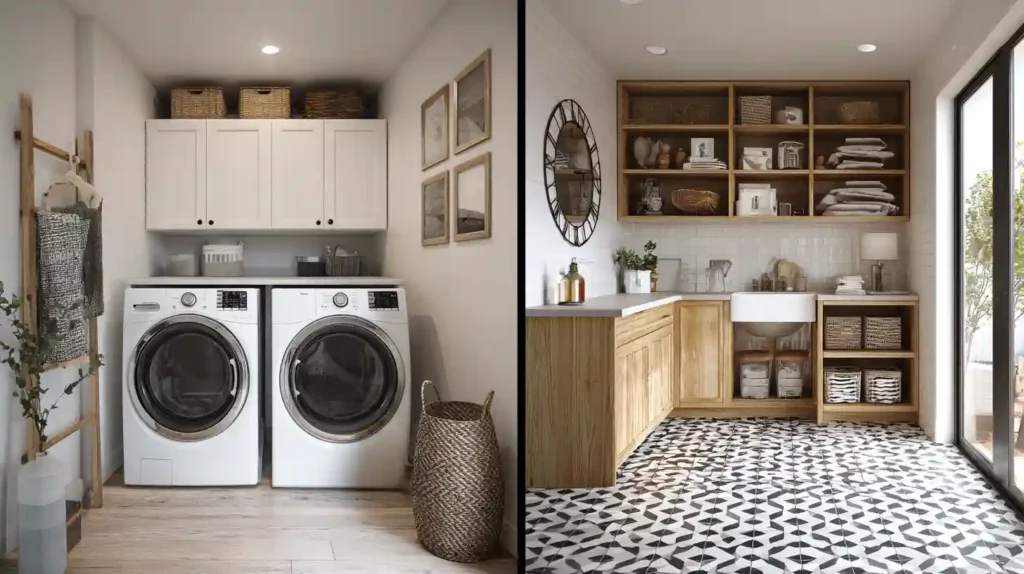
Modern Farmhouse. Shiplap walls, apron-front sinks, and matte black hardware
If you love that cozy, lived-in HGTV vibe, modern farmhouse is your style soulmate. I’m talking crisp white shiplap installed horizontally for a classic look, a deep apron-front utility sink, and matte black faucets and cabinet pulls that add just the right amount of contrast.
Key elements to nail this look.
- Shiplap or beadboard walls. Use 1 x 6 pine boards with a nickel-gap spacing. Paint them in Benjamin Moore’s Simply White, OC-117, for that fresh, airy feel.
- Open shelving. Install chunky wooden shelves at least 10-12 deep with black metal brackets to display woven baskets and glass apothecary jars.
- Vintage-inspired fixtures. Think gooseneck faucets, porcelain sink basins, and Edison bulb pendant lights.
This style works beautifully in small spaces because the white palette reflects light and makes the room feel larger, while the black accents ground the design and prevent it from feeling too sterile.
Mid-Century Modern: Tapered leg cabinetry, walnut accents, and geometric floor tiles
For a sleek, retro-chic laundry room, mid-century modern brings clean lines and warm wood tones into play. I love pairing walnut-stained cabinets with brass or brushed gold hardware. It instantly elevates a utilitarian space into something special.
Signature mid-century touches.
- Tapered leg base cabinets. These create visual lift and make your room feel less boxy. Look for cabinets that sit 4-6 inches off the floor on angled wooden legs.
- Geometric floor tiles. Go bold with hexagon or penny round tiles in a two-tone pattern, think white and charcoal or mint and cream.
- Walnut accents. Add a walnut butcher block countertop or floating shelves to warm up the space without overwhelming it.
Pro tip. In a small laundry room, use mid-century style as accents rather than going full-throttle. A single walnut shelf, a starburst mirror, and retro cabinet pulls can deliver the vibe without cluttering your sightlines.
DIY Small Bedroom/Laundry Hybrid: Integrating a laundry closet into a bedroom or hallway
Here’s a layout I’ve designed multiple times for city apartments and older homes: the laundry closet tucked into a bedroom or hallway. It’s all about concealment and multi-function magic.
How to make it work.
- Install bifold or sliding doors, preferably frosted glass or louvered for ventilation. to hide the machines when not in use.
- Soundproof the closet with acoustic panels or dense insulation batts between the studs. Trust me, your sleep will thank you.
- Add a fold-down ironing board to the inside of the closet door to maximize every inch.
- Use the same flooring as the bedroom or hallway so the laundry zone feels integrated, not tacked-on.
I once transformed a 30-wide coat closet in a Brooklyn studio into a fully functional laundry nook, stackable washer/dryer, overhead shelf, and a pull-out hamper. The key? Treating it like built-in furniture, not an afterthought.
3. 2026 Color Palettes & Textures
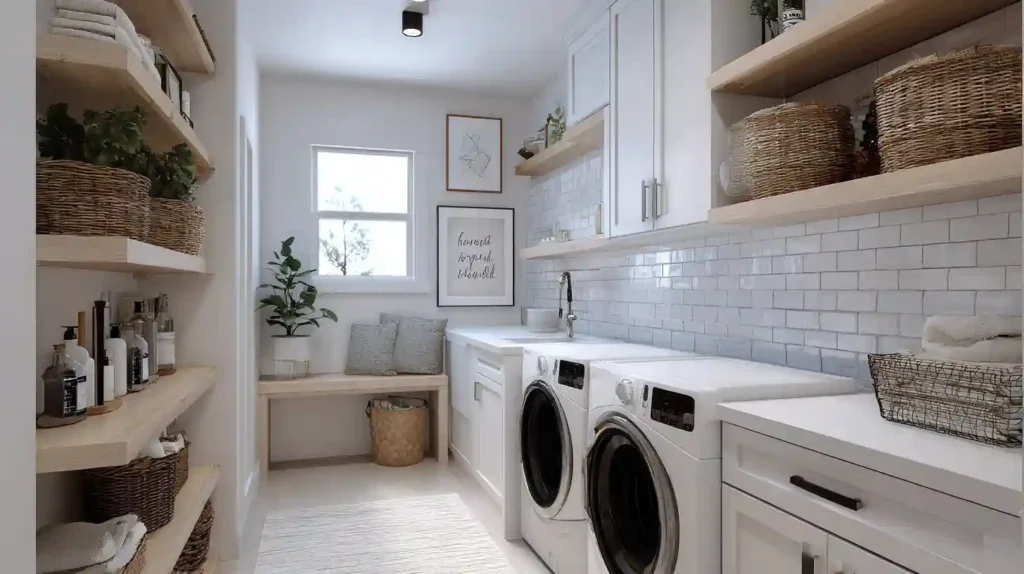
The New Neutrals: Using Sherwin-Williams Alabaster (SW 7008) for airy vibes
Sherwin-Williams Alabaster is hands-down my go-to for small laundry rooms. It’s a soft, warm white with just enough creaminess to feel inviting without reading yellow under LED lighting. This shade opens up tight spaces and pairs beautifully with both cool-toned grays and warm wood accents.
Why does it work in laundry rooms?
- Reflects natural and artificial light to make windowless spaces feel brighter
- Creates a clean backdrop that won’t compete with colorful detergent bottles or patterned towels
- Works seamlessly with stainless steel appliances and white cabinetry
Application tip. Use Alabaster on walls and trim for a cohesive, gallery-like feel. If your laundry room has zero windows, this monochromatic approach actually makes the space feel larger by eliminating visual breaks.
The Jewel Box Trend: Going bold with Benjamin Moore Silhouette, AF-655 for small, windowless rooms
Now, if you’re feeling adventurous, let’s talk about the jewel box approach. This 2026 trend embraces deep, moody colors in tiny spaces, and it’s stunning. Benjamin Moore Silhouette (AF-655) is a sophisticated charcoal-black that transforms a cramped laundry closet into a chic, intentional design moment.
How to pull it off without making the room feel like a cave.
- Pair with brass or gold hardware for warmth and glamour
- Install plenty of task lighting, under-cabinet LEDs, and a statement flush-mount fixture are non-negotiable
- Use high-gloss or semi-gloss paint finish to bounce light around and create subtle reflections
- Add one large mirror, even 18 x 24, to visually double the space
I recently designed a 4 x 6 laundry closet in Silhouette with white quartz countertops and brushed gold faucets. It was photographed like a luxury powder room and became the homeowner’s favorite hidden gem.
Texture Play. Pairing woven wicker baskets with quartz or butcher block countertops
Texture is where small laundry rooms go from functional to fabulous. I love mixing organic woven wicker baskets, perfect for sorting lights and darks, with sleek quartz or butcher block countertops for a high-low designer look.
Winning texture combinations.
- Wicker + White Quartz. The natural texture of seagrass or rattan baskets softens the clean lines of white quartz like Caesarstone Pure White. Stack baskets on open shelving or slide them under a countertop.
- Butcher Block + Matte Tile. A warm walnut or maple butcher block countertop sealed properly for moisture resistance. pairs beautifully with matte subway or zellige tiles in sage green or terracotta.
- Linen + Metal. Use linen-blend hamper bags in brass or black metal frames for a tactile, spa-like vibe.
Pro tip. In a space under 50 square feet, limit yourself to 3-4 textures max. Think. smooth countertop + woven basket + matte wall tile + one natural fiber rug. Any more and it starts to feel chaotic instead of curated.
4. Storage Hacks & Hidden Solutions
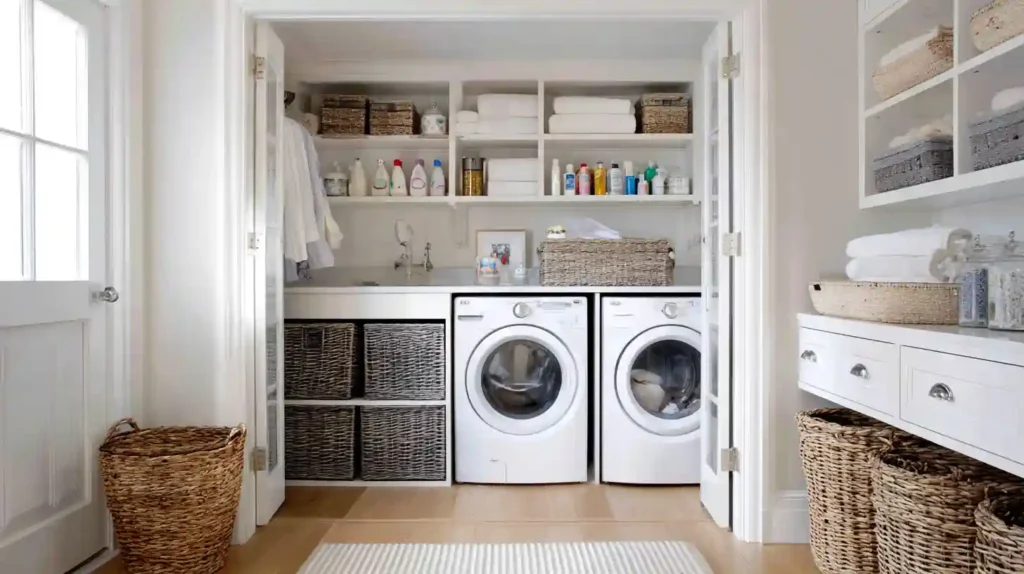
Slide-Out Pantries. Utilizing the 6-inch gap between the machine and the wall
That awkward 6-8 gap between your washer and the wall? It’s pure storage gold! I install slide-out pantry cabinets in these narrow spaces to hold laundry essentials like detergent, dryer sheets, stain removers, and cleaning supplies. These pull-out organizers are typically 4-6 wide and can be DIY-ed or purchased from retailers like Rev-A-Shelf or The Container Store.
What fits in a slide-out organizer?
- 4-6 bottles of detergent and fabric softener
- Stain treatment pens and sprays
- Dryer balls and lint rollers
- Small cleaning brushes
Installation tip. Mount it on heavy-duty full-extension drawer slides rated for at least 100 lbs. Add a soft-close feature so it doesn’t slam shut and rattle your bottles. I’ve even seen homeowners paint these units to match their cabinetry. It looks completely custom for under $75!
Wall-Mounted Drying Racks. Retractable solutions that disappear when not in use
For delicates and air-dry items, retractable wall-mounted drying racks are absolute lifesavers in small spaces. Brands like Leifheit and Foxydry make accordion-style racks that extend up to 24, when you need them and fold flat, less than 3″ deep. against the wall when you don’t.
Where to install them.
- Above the washer/dryer, if you have 18-24 inches of wall clearance
- On the side wall adjacent to your machines
- Inside a cabinet door for ultra-concealed storage
My favorite hack. Install two retractable racks at different heights, one at 60″ for shirts and one at 72 for pants. This creates a layered drying system that maximizes vertical airflow and doesn’t monopolize your entire wall.
The Folding Station. How to install a DIY waterfall countertop over side-by-side units
If you have side-by-side front-load machines, a countertop over them is non-negotiable. This creates a dedicated folding surface and makes your laundry room feel more like a “real room” than a closet.
Step-by-step DIY installation.
- Measure the depth. Most washers/dryers are 28-32 inches deep. Add 1-2 overhang in the front for a finished look.
- Choose your material. Butcher block, 1.5 thick, is budget-friendly and warm. Quartz or laminate offers durability and water resistance.
- Cut to size. Your countertop should span the full width of both machines plus any side cabinetry. Standard width is 54-60 for two machines.
- Support it properly. Install L-brackets every 18-24 inches along the back wall and side walls. The machines themselves can support the center, but brackets prevent sagging.
- Seal the edges. Use clear silicone caulk where the countertop meets the wall to prevent water or detergent from seeping behind.
Waterfall edge bonus. If you want that designer touch, extend your countertop material down one or both sides, typically 3-4 inches for a modern waterfall effect. It costs about $150-$250 extra but instantly elevates the whole space.
5. Lighting & Decor Accents
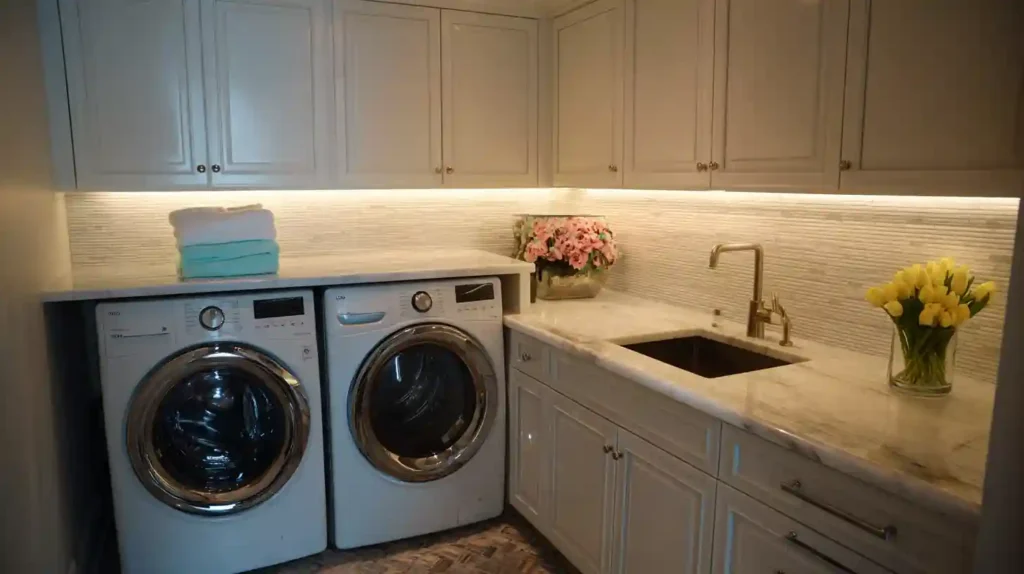
Task Lighting: Under-cabinet LED strips for stain treating
Let’s talk about lighting, because a single overhead bulb just won’t cut it in a functional laundry room. Under-cabinet LED strip lighting is my secret weapon for illuminating countertops where you’re pre-treating stains, folding clothes, or measuring detergent.
Why LED strips are perfect for laundry rooms,
- They’re linkable and dimmable, so you can customize brightness based on the task
- Most plug-in versions require zero hardwiring (perfect for renters!)
- Color temperature matters. Choose 4000K-5000K, bright white for true color rendering when checking stains
Installation made easy. I use adhesive-backed LED strips from brands like Philips Hue or Lutron. Simply clean the underside of your cabinet, peel, stick, and plug in. For a seamless look, add an aluminum channel to diffuse the light and hide the individual bulbs-it’s a $15 upgrade that looks like a $500 custom job.
Statement Fixtures. Semi-flush mounts that add a roomy feel to a utility space
Here’s where you get to have fun! A statement light fixture transforms your laundry room from a boring closet to a stylish space I’m proud to show guests.” Since most laundry rooms have low ceilings, 7-8 is standard, I recommend semi-flush mount fixtures that sit 6-12 from the ceiling.
My top picks for small laundry rooms.
- Modern Farmhouse. A matte black cage fixture with Edison bulbs, 12-14 diameter
- Mid-Century. A brass sputnik or globe fixture with opal glass shades
- Coastal/Transitional. A drum shade in natural linen or white fabric with brass hardware
Size guide. For a room under 50 square feet, your fixture diameter should be 12-16. Any larger and it overwhelms the space. Hang it centered over your folding area or in the middle of the room for balanced illumination.
Decor Tip. Using glass jars for detergent pods to reduce visual clutter
This is the styling trick that makes the biggest visual impact with the least effort: decant your laundry supplies into matching glass jars or canisters. Those bright orange Tide bottles and neon-green Gain containers? They’re visual chaos in a small space.
What I recommend:
- Large glass canisters, 64 oz with airtight bamboo or metal lids for detergent pods and dryer balls
- Apothecary jars with chalkboard labels for different detergent types (delicates, colors, whites
- Small pump bottles,12 oz for liquid stain remover-they look like fancy hand soap!
Styling tip. Arrange your jars on a small wooden tray or lazy Susan on your countertop. This keeps them contained, makes them easy to access, and creates a mini “vignette” that feels intentional. Add one small potted succulent or a bundle of eucalyptus in a bud vase, and suddenly your laundry room has personality.
Bonus. Clear containers let you see at a glance when you’re running low on supplies-no more surprise late-night runs to Target!
6. Maintenance & Longevity Tips
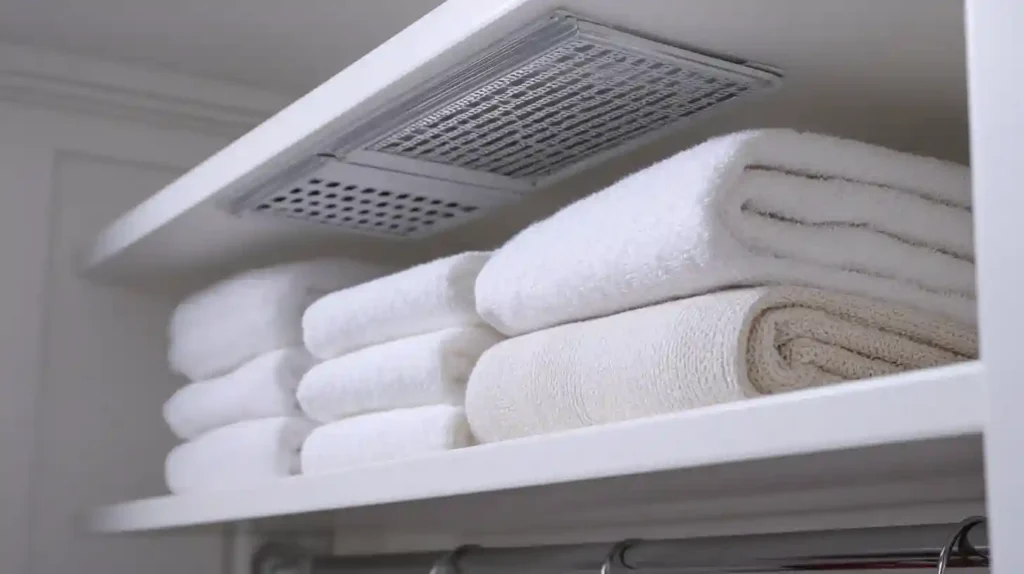
Moisture Control. Ensuring proper venting to prevent mold in tight closets
In small laundry spaces, especially closets, moisture buildup is your biggest enemy. Without proper ventilation, you’re setting yourself up for mold, mildew, and that musty smell that no amount of air freshener can hide.
Critical venting requirements.
- Dryer vents must exhaust to the outside, never into an attic, crawl space, or back into the room. Use rigid metal ductwork (not flexible plastic) and keep the run as short and straight as possible-ideally under 25 feet total length.
- Install a louvered door or vent grate if your laundry is in a closet. This allows air circulation even when the door is closed. I love the look of vintage-style louvered bifold doors-they’re functional and charming.
- Run a small exhaust fan if your space is completely interior with no windows. A 50-70 CFM bathroom-style fan vented to the exterior works beautifully.
Pro tip. After every load, leave your washer door cracked open for 2-3 hours to let the drum dry completely. This single habit prevents 90% of front-loader mold and odor issues.
Vibration Dampening. Using rubber pads for machines on second-floor laundry areas
If your laundry room is on the second floor or above a living space, vibration and noise control is essential for your sanity and your neighbors’! I always install anti-vibration pads underneath washers and dryers to absorb movement and reduce the rumbling that travels through floor joists.
What works best?
- Rubber or silicone pads at least 1/2 thick) designed specifically for washers and dryers, brands like Steady Pads or Vibration Solutions are excellent
- Level your machines perfectly using a bubble level and adjusting the feet. Even 1/4 off can cause excessive shaking during the spin cycle
- Check that machines aren’t touching walls or cabinets-leave at least 1-2 inches of clearance on all sides to prevent rattling
Quick fix for existing vibration issues. Make sure your washer is balanced and not overloaded. An unbalanced drum is the #1 cause of excessive noise. Also, remove shipping bolts if you recently installed a new machine-you’d be surprised how often these get forgotten!
Appliance Care. Cleaning the lint trap and door seals to extend machine life
Let’s keep your machines running smoothly for 10+ years with simple monthly maintenance that takes less than 15 minutes.
Essential tasks.
- Clean the dryer lint trap after every single load-this improves efficiency and prevents fire hazards. Once a month, wash the screen with warm, soapy water to remove fabric softener buildup that blocks airflow.
- Wipe down washer door seals and gaskets weekly with a 1:1 vinegar-water solution. This prevents mold and that black gunk that builds up in the folds. Pay special attention to the bottom of the seal where water pools.
- Run a monthly cleaning cycle with washer cleaner tablets (Affresh or Tide) or 2 cups of white vinegar on the hottest, longest cycle with an empty drum.
- Clean the washer filter, usually located behind a small panel at the bottom front. every 3 months. You’ll be shocked at the coins, bobby pins, and lint hiding in there!
Dryer vent deep clean: Once a year, disconnect your dryer and use a vent cleaning brush kit, about $20 on Amazon, to remove lint buildup from the entire duct run. This single task can improve drying time by 30% and dramatically reduce fire risk.
FAQ People Also Ask
How can I hide my laundry in a small apartment?
The best way to hide laundry in a small apartment is with sliding barn doors, curtains, or custom bifold doors that conceal the machines when not in use. I love installing a floor-to-ceiling curtain on a track system, like IKEA’s VIDGA-it’s budget-friendly, easy to install, and softens the space visually.
Other clever concealment ideas
- Build a cabinet enclosure with doors that match your kitchen cabinetry for a seamless, built-in look
- Use a folding screen or room divider in a studio apartment to section off the laundry zone
- Install pocket doors if you’re renovating-they slide into the wall and save the floor space that swinging doors require
Style tip. If your laundry area is visible from your main living space, paint the interior of the closet or alcove in the same color as your walls. Add matching baskets and cohesive decor so it blends in rather than standing out as an eyesore.
Is it cheaper to stack a washer and dryer or keep them side-by-side?
Stacking is almost always cheaper when you factor in the total cost of your laundry room setup. Here’s the breakdown.
Stacked configuration advantages.
- Saves 9-12 square feet of floor space, which means you need less flooring, fewer cabinets, and a smaller footprint overall
- Requires minimal cabinetry. You can often get away with just overhead storage instead of full base cabinets
- No countertop needed between machines, saving $200-$600 depending on material
Side-by-side configuration costs.
- Requires more square footage, which translates to higher construction costs in new builds or renovations
- Needs a countertop spanning both machines $300-$800 for butcher block or quartz
- Often requires more plumbing runs if machines are farther from the wall connections
The exception. If you already have the space and existing side-by-side hookups, converting to stacked may require new electrical work, venting modifications, and a stacking kit, $100-$200-which could offset the savings.
Bottom line. For apartments, closets, and tight spaces under 40 square feet, stacking saves money and maximizes function. For larger dedicated laundry rooms 60+ square feet, side-by-side offers easier loading and a generous folding surface.
What is the best paint finish for a laundry room?
Semi-gloss or satin finishes are the absolute best choices for laundry rooms because they’re moisture-resistant, scrubbable, and durable enough to handle splashes, humidity, and frequent cleaning.
Here’s the finish breakdown.
- Semi-gloss is my top pick. Highly washable and reflects light beautifully in small, windowless spaces. Use it on walls, trim, and even ceilings in high-moisture areas. The slight sheen bounces light around and makes dark colors (like that jewel box trend!) feel less cave-like.
- Satin, great middle ground. Offers a soft, velvety finish with good moisture resistance. It’s less reflective than semi-gloss, so it hides minor wall imperfections better. Perfect if your laundry room has textured drywall or you want a more muted look.
- Avoid flat/matte finishes. They’re impossible to clean without damaging the paint, and they absorb moisture instead of repelling it-a recipe for mildew and staining.
Application tip. Use a primer specifically formulated for high-moisture areas (like Kilz Kitchen & Bath or Zinsser Mold Killing Primer) before your topcoat. This creates a waterproof barrier and ensures your beautiful paint job lasts for years, not months.
My go-to combo. Sherwin-Williams Emerald Semi-Gloss in Alabaster for walls, and Emerald Urethane Trim Enamel in Extra White for trim and cabinets. It’s a professional-grade setup that wipes clean with just a damp cloth!